Quick answer: "Research use only" is wording a seller prints on a label or product page. It is not an FDA category, and it does not make a product a lawful way to obtain a drug for yourself. In warning letters dated 2026-03-31 and later, FDA says such labels do not control when the seller's website shows human use, and it calls the products "unapproved new drugs." This page explains FDA's reasoning step by step.
Anyone who has searched for a peptide has seen the phrase: "for research use only," "not for human consumption," "for laboratory purposes." Some readers take it as a sign of a legitimate laboratory supplier. Others take it as a loophole. FDA's published letters describe it differently, and we report what they say. Some links on this site are affiliate links; none appear on this page, and we never name, link or rank the sellers FDA wrote to.
Our rule for this page is simple. We report FDA's reasoning and the dates of its letters. We do not give instructions, we do not name sellers, and we do not say what any reader's purchase means legally. For the wider legal picture, see is it legal to buy peptides online.
What the label means, and what it does not
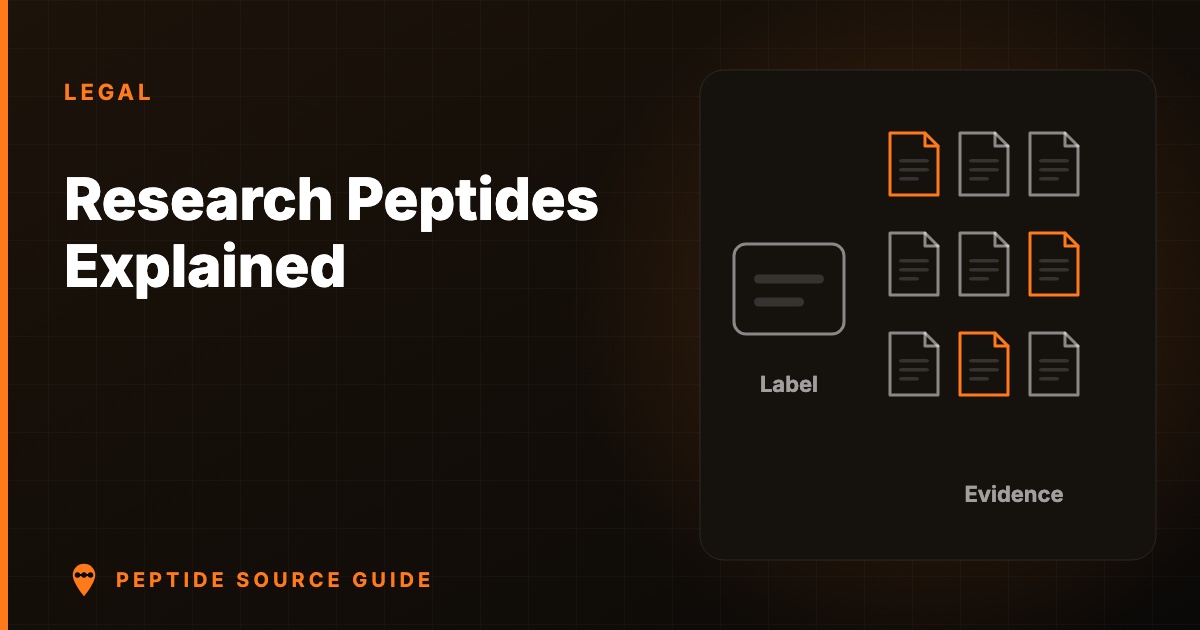
A genuine research chemical is a substance sold to laboratories for experiments on cells, tissue or animals, to buyers who are qualified to handle it. The label's job is to tell the buyer what the product is not for. The wording is legitimate when the product really is a laboratory input and the seller handles it that way.
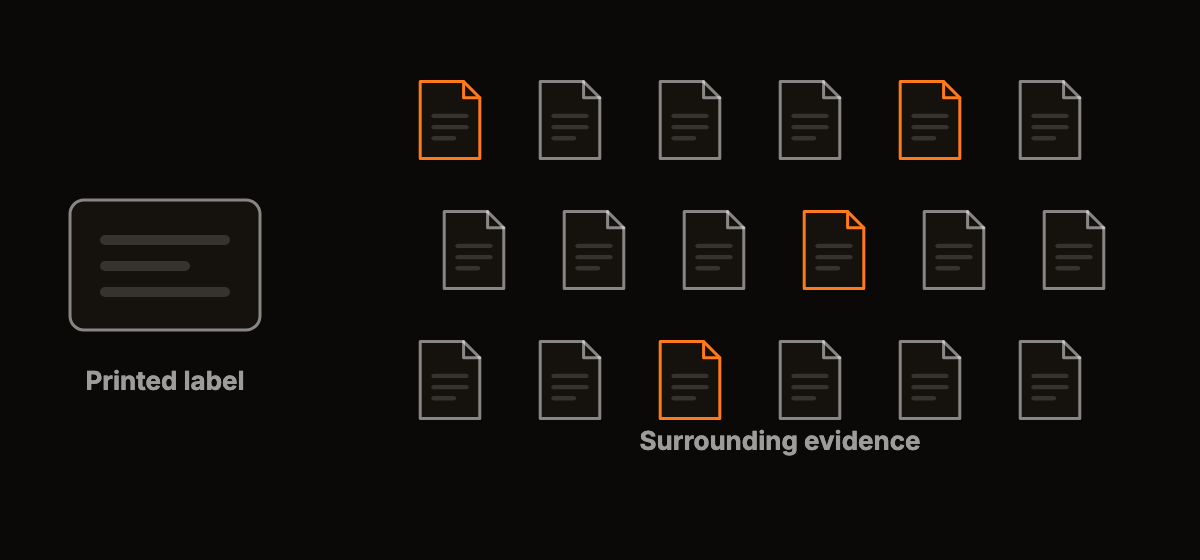
The trouble starts when the same wording sits on a product page that talks about weight, appetite, blood sugar or sexual function, ships to consumers, and comes with items for preparing an injection. In that setting, FDA says, the label is a disclaimer and the rest of the page is evidence of what the product is for.
There is no FDA category called "research peptide." Products are either approved drugs, lawfully compounded drugs for an identified patient, unapproved drugs, or something else with its own rules. Our guide to where peptides come from shows how the four source types differ and what you can check at each one.
Why sellers use the wording
We cannot read a seller's mind, so we describe only what FDA says. The letters we read quote labels such as "Research Use Only," "not for human consumption," "for laboratory research purposes only" and "not intended for human consumption, medical use, or veterinary use." FDA then explains why it does not regard those words as decisive.
The wording also shapes what a buyer believes. A reader who sees it may assume that a laboratory oversees the product, that quality has been checked, or that the transaction sits outside the drug rules. FDA's letters address the last assumption directly. The first two are unrelated to the label: nothing in the letters says a research label signals any quality check.
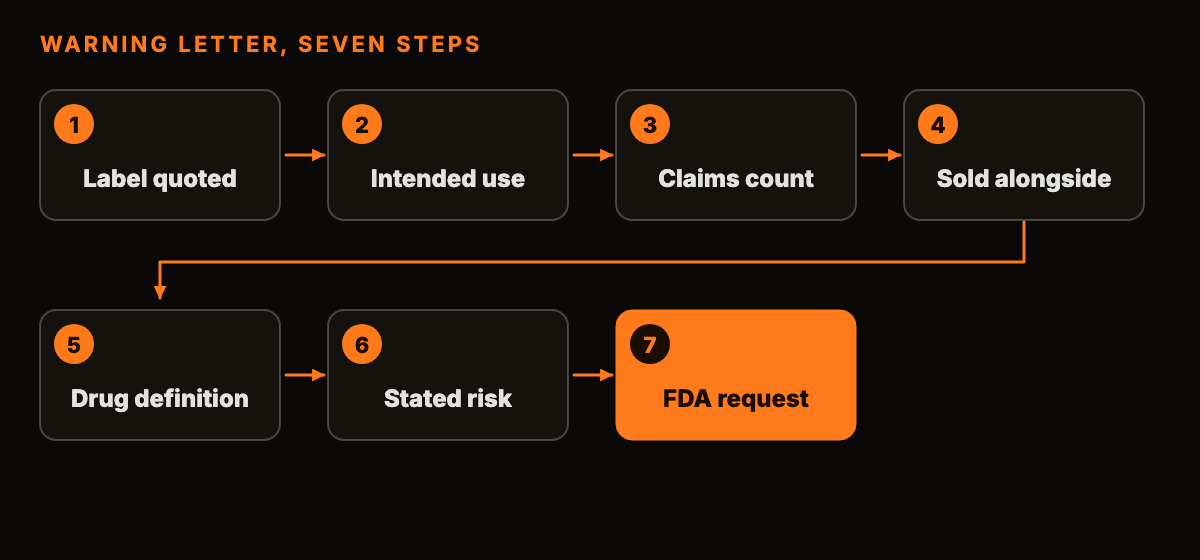
Reading a warning letter
This section is the core of the page. FDA warning letters follow a repeating pattern, and once you know it you can read any of them. We use letters dated 2025-02-26, 2026-03-31, 2026-06-17, 2026-08-24 and 2026-09-23, each cited by its FDA URL in the Sources list. We do not name the recipients, and you do not need their names to follow the reasoning.
Step 1: the label is quoted, then set aside
Each letter first reports what the seller's labels say. FDA then states that "evidence obtained from your website establishes" that the products are "intended to be drugs for human use." That sentence is the pivot of every letter in the 2026 group. The label is not denied; it is counted as one piece of evidence among several, and the website outweighs it.
Step 2: intended use comes from the seller's own words
FDA's authority for this step is a regulation, 21 CFR 201.128, which defines "intended uses" as "the objective intent of the persons legally responsible for the labeling." The rule says intent may be shown by "expressions," the design or composition of the article, or "the circumstances surrounding the distribution." Examples it names include "labeling claims, advertising matter, or oral or written statements."
So the letters collect the seller's statements. They quote product-page claims about body weight, appetite, blood sugar, body composition, sexual function and aging. The claims vary by letter, but the move is the same: the page says what the product does for a person, and FDA reads that as the intended use.
Step 3: "research shows" counts as a claim
One letter dated 2026-06-17 relies on a product-page sentence that begins "Research shows" and then states an effect on a body function. Letters dated 2026-08-24 quote passages that summarize laboratory studies, and phrases such as "preclinical models," and counts them as drug claims. FDA's reasoning is that a page presenting study results as reasons to use the product is making a claim about what the product does.
For a reader, the lesson is practical. A listing that pairs a research label with a paragraph of study results is doing the thing the letters describe. We cover how to read such listings in how to spot fake peptides.
Step 4: what is sold alongside the product
FDA's letters give weight to items sold together. In several letters, a diluent and syringes sold with the product are cited as showing intent for injection. One letter dated 2026-03-31 describes a kit containing a diluent and a syringe, and says selling them together "demonstrates" that the diluent is meant for injection. Letters dated 2026-08-24 add that sellers present the diluent as a way of preparing the product, "thus, providing the means to prepare an injectable drug for human administration."
Other letters point to a calculator or guide offered on the site. FDA cites a "peptide calculator" sold next to the diluent in one letter, and a "peptide guide" with a calculator in another, as resources that provide the means to prepare an injectable drug. We report this as FDA's reasoning, not as a how-to; this site does not explain preparation or measurement for any product.
Step 5: the drug definition and the approval gap
FDA then applies the Act. It says the products are drugs under section 201(g)(1) because they are intended for use in the diagnosis, cure, mitigation, treatment, or prevention of disease, or intended to affect the structure or function of the body. It says they are "new drugs" under section 201(p) because they are not generally recognized as safe and effective, and that no approved application under section 505 is in effect for them. Introducing them into interstate commerce, FDA says, violates sections 301(d) and 505(a).
The earliest letter we read, dated 2025-02-26, adds a second charge. It says the products are also misbranded, in part because they were sold without a prescription under section 503(b)(1) and without adequate directions for use.
Step 6: the stated risk
FDA's opening risk language explains why it cares. Injectable products, the letters say, "bypass some of the body's key defenses against toxins and microorganisms." The 2025 letter says drugs that circumvent regulatory safeguards "may be contaminated, counterfeit, contain varying amounts of active ingredients."
Step 7: what FDA asks the seller to do
Each letter requests a written reply within fifteen working days. It warns that failure to correct violations "may lead to regulatory or legal action including, without limitation, seizure and injunction." A warning letter is not a final judgment. It states FDA's position and invites correction.
A letter dated 2026-09-23 is worth noting for contrast. It involves an injectable semaglutide product sold without a prescription, with no research label at all. FDA's reasoning there rests on the absence of an approval and a prescription. It notes that approved semaglutide products "are only available pursuant to a prescription."
The customs side
U.S. Customs and Border Protection issued a release dated 2026-03-31 on peptides seized at its Cincinnati office: about 5,000 individual shipments from one overseas shipper between December 2025 and 2026-03-25, declared as other goods. CBP lists retatrutide, semaglutide and tirzepatide among the contents and says the "authenticity of the products and safety of these peptides cannot be determined." It also says therapeutic peptides may only be prescribed under doctor's orders.
The release does not say the packages carried research-use-only labels, and we do not claim that they did. Where the release and FDA's letters meet is the point about safety: in both, the issue is a product whose contents nobody has verified.
The risks, in FDA's words
FDA's page on unapproved GLP-1 drugs (current as of 2026-10-01) says illegally marketed versions sold online "may be counterfeit," "could contain the wrong ingredients," and could contain "too little, too much or no active ingredient at all." It says FDA has warned companies selling products "falsely labeled" for research purposes or not for human consumption, sold directly to consumers "for human use with dosing instructions," and that it "urges consumers not to purchase these products which are of unknown quality."
FDA's BeSafeRx material names the same hazards for unsafe online pharmacies: wrong or harmful ingredients, too much or too little active ingredient, and medicine that looks different or arrives damaged. The common thread is a product whose contents nobody has verified.
What this means for a buyer
The warning letters do not say a reader should do any particular thing. They tell us how FDA classifies the product and the seller's conduct. For a cautious reader, three points follow.
- A research label on a product meant for people is a reason to stop and check, not a sign of legitimacy. That is our fifth criterion in the five-point check, and it comes from our reading of these letters rather than from an FDA checklist.
- The route FDA points to is a prescription from a licensed prescriber filled at a state-licensed pharmacy. Compounded medications are not FDA-approved, which is why our compounded peptides guide asks what to confirm in writing.
- If a lawful route does not exist for a product, the honest answer may be that there is no good place to buy it. We say that plainly on our pages for products without an approval.
Sources
- FDA warning letter dated 2025-02-26 read 2026-10-07
- FDA warning letter dated 2026-03-31, first page current as of 2026-04-07, read 2026-10-07
- FDA warning letter dated 2026-03-31, second read 2026-10-07
- FDA warning letter dated 2026-06-17 read 2026-10-07
- FDA warning letter dated 2026-08-24, first read 2026-10-07
- FDA warning letter dated 2026-08-24, second read 2026-10-07
- FDA warning letter dated 2026-08-24, third read 2026-10-07
- FDA warning letter dated 2026-09-23 read 2026-10-07
- Cornell LII: 21 CFR 201.128, meaning of intended uses read 2026-10-07
- CBP: Cincinnati CBP foils scheme to smuggle over 5,000 unapproved peptides release dated 2026-03-31, read 2026-10-07
- FDA: concerns with unapproved GLP-1 drugs used for weight loss page current as of 2026-10-01, read 2026-10-07
- FDA: how to buy medicines safely from an online pharmacy page current as of 2025-01-02, read 2026-10-07
FAQ
What does "research use only" mean on a peptide label?
It is wording chosen by the seller. FDA has no category for it. In warning letters, FDA says the wording does not control when the seller's website shows that the product is intended for human use.
Does FDA approve research peptides?
No. FDA's letters say no approved application is in effect for the products it describes, and it calls them "unapproved new drugs."
Are research peptides safe?
FDA says such products are "of unknown quality" and may be counterfeit or contain the wrong or an inconsistent amount of ingredient. FDA does not verify products it has not reviewed.
Why does FDA mention syringes and calculators?
In its reasoning, items sold with a product are evidence of what the seller intends the product to be used for. FDA cites a diluent, syringes, a calculator and a guide as examples.
Do the letters apply to buyers?
The letters we read are addressed to sellers. They do not give a verdict on buyers, and we do not either; for your own situation, ask a licensed attorney.
Is there a lawful way to get a peptide drug?
FDA points to a prescription from your doctor filled at a state-licensed pharmacy. Approved brand drugs and compounded medications both follow that route, and compounded medications are not FDA-approved.
Not medical advice. See the medical disclaimer.