Quick answer: FDA's published position is that peptide products sold online under "research use only" labels are "unapproved new drugs" when the seller's evidence shows they are intended for human use. The route FDA points to is a prescription filled at a state-licensed pharmacy. FDA also says that in most circumstances it is illegal for individuals to import drugs for personal use. This page reports sources; it is not legal advice.
People ask "is it legal to buy peptides online" as if the answer were one word. It is not, because the law attaches to the product, the seller, the route and sometimes the state, not to the word "peptide." We read the primary documents on 2026-10-07 and report what each one says, with its date, so you can judge for yourself. Some links on this site are affiliate links; none appear on this page, and no seller is named or ranked here.
A note on how we use words. We do not say that any particular purchase is or is not a crime, because we cannot know the facts of your case and we are not lawyers. We report what FDA says about the products and the sellers. For your own situation, a licensed attorney in your state is the right person to ask.
Why one question becomes three
"Peptide" is a chemical description, not a legal category. A few peptides are FDA-approved drugs with a label and a manufacturer. Many others have no approval at all. Some are marketed as dietary supplement ingredients, some are sold with a research label, and some are made by a pharmacy for one named patient. Each of these has a different legal footing.
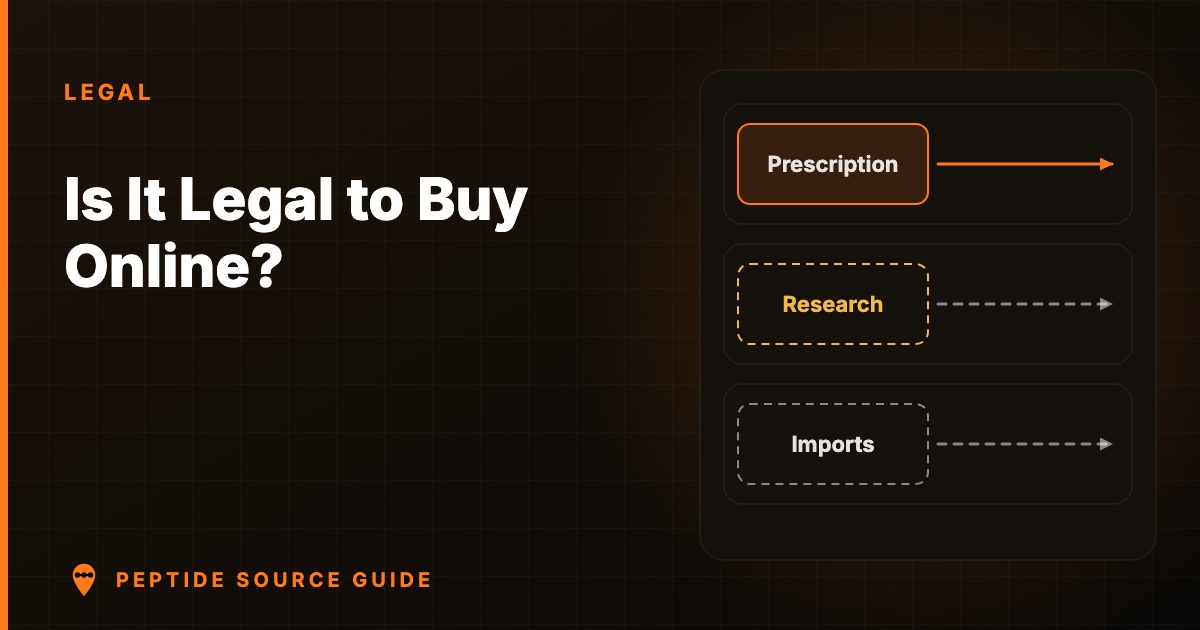
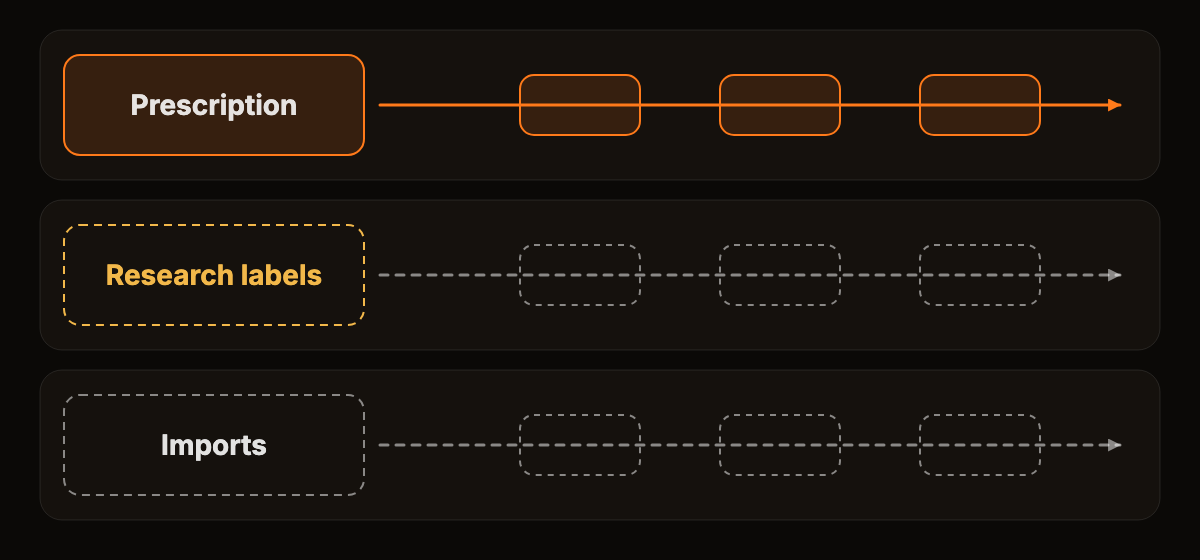
So the useful question is not "are peptides legal" but "which route would this purchase follow?" We sort the routes into three groups, and the rest of the page follows that sort.
- The prescription route. A licensed prescriber writes a prescription for an identified patient, and a state-licensed pharmacy fills it. The product is either a brand drug with an FDA approval or a pharmacy-made compounded medication.
- The research-label route. A website sells a vial labeled for laboratory research and not for human use, with no prescription involved.
- The importation route. A product made or shipped from outside the United States arrives by mail or courier, whatever its label says.
Our guide to where peptides come from shows these same groups as a table with a column for what you can verify at each one.
The prescription route
FDA's guidance for consumers is consistent across its pages. Its GLP-1 warning page (current as of 2026-10-01) tells patients to "obtain a prescription from their doctor and fill the prescription at a state-licensed pharmacy." Its BeSafeRx consumer update lists four signs of a safe online pharmacy: a required prescription, a US street address and phone line, a pharmacist on staff, and a license from a state board.
Within that route there are two product types. Approved brand drugs have an FDA-reviewed label. Compounded drugs do not. Compounded medications are not FDA-approved, and FDA's compounding questions and answers page (current as of 2025-09-16) says that FDA "does not verify the safety, effectiveness or quality" of them. The same page adds a limit: compounded drugs belong with patients whose needs an approved drug cannot meet.
The statute behind compounding is section 503A of the Federal Food, Drug, and Cosmetic Act. Its text, as mirrored by Cornell's Legal Information Institute, conditions the exemption on a drug being compounded "for an identified individual patient based on the receipt of a valid prescription order," by a licensed pharmacist in a state-licensed pharmacy or by a licensed physician. That patient-specific condition is the legal hinge. A pharmacy preparing a drug for you after a prescriber's order is the case the statute describes. A seller shipping unlabeled stock to anyone who clicks "add to cart" is not.
A prescription does not make every ingredient eligible. FDA's 503A bulk-substance page (current as of 2026-05-14) allows three sources of ingredient: a published pharmacopeia monograph, a component of an FDA-approved drug, or FDA's own 503A list. Our guide to compounded peptides explains the 503A and 503B categories in plain words, and the prescription walkthrough shows what the online process looks like.
The research-label route
This is the route that most readers asking the question have in mind. A vial arrives with wording such as "research use only" or "not for human consumption." Sellers often say, in effect, that the label settles the matter.
FDA's warning letters say otherwise. In letters dated 2026-03-31, FDA states that despite such labels, evidence from the seller's own website establishes that the products are "intended to be drugs for human use." FDA calls the products "unapproved new drugs" and says that introducing them into interstate commerce violates sections 301(d) and 505(a) of the Act. We take the letters apart, one reasoning step at a time, in research peptides explained.
For this page the point is narrow. The warning letters are addressed to sellers. They report FDA's view of the seller's conduct and the product's status, and they give no verdict on any buyer. What they tell a reader is how FDA classifies the product in the vial: as a drug without an approved application, regardless of the label.
The importation route
Many online sellers ship from abroad, so FDA's personal importation page matters. That page (current as of 2025-08-18) opens its answer with a caution: "In most circumstances," individuals may not lawfully import drugs or devices for personal use, in FDA's word "illegal." It adds that a drug approved in another country but unapproved in the United States is illegal to import, and that FDA "cannot ensure the safety and effectiveness" of medicine bought over the internet from foreign sources.
The same page lists conditions under which FDA staff "may consider a more permissive decision," such as a serious condition, no domestic alternative and a small personal supply. We report these as FDA's discretion, not as a right a reader holds. FDA also says it may refuse a shipment that is on an import alert, appears to be intended for commercial distribution, or appears to present a serious risk to health.
U.S. Customs and Border Protection adds an enforcement example. A CBP release dated 2026-03-31 says the Cincinnati field office seized about 5,000 individual shipments of peptides from one overseas shipper between December 2025 and 2026-03-25. CBP says the shipments were "mis-manifested" as other goods. It adds that therapeutic peptides "may only be prescribed under doctor's orders" and that the authenticity and safety of the products "cannot be determined." The release does not say the packages carried research labels, so we do not say so either.
What each source says
The table below is the heart of this page. Each row is a primary document, with its date and a plain statement of what it does and does not say. Nothing here comes from a news summary.
| Source | Date | What it says | What it does not say |
|---|---|---|---|
| FDA compounding questions and answers | Current as of 2025-09-16 | Compounded drugs are not FDA-approved; FDA does not verify their safety, effectiveness or quality; consumers buying online "may not know the identity of the compounder." | It does not name individual peptides. |
| FD&C Act section 503A (21 USC 353a), statute text | Read 2026-10-07 | The exemption applies when a drug is compounded for an identified patient on a valid prescription order by a licensed pharmacist in a state-licensed pharmacy or by a licensed physician; bulk substances need valid certificates of analysis. | It does not decide whether any particular peptide is eligible. |
| 21 CFR 201.128, "intended uses" | Read 2026-10-07 | Intended use is "the objective intent of the persons legally responsible for the labeling," shown by expressions, the design of the article or "the circumstances surrounding the distribution." | It does not say a label alone controls. |
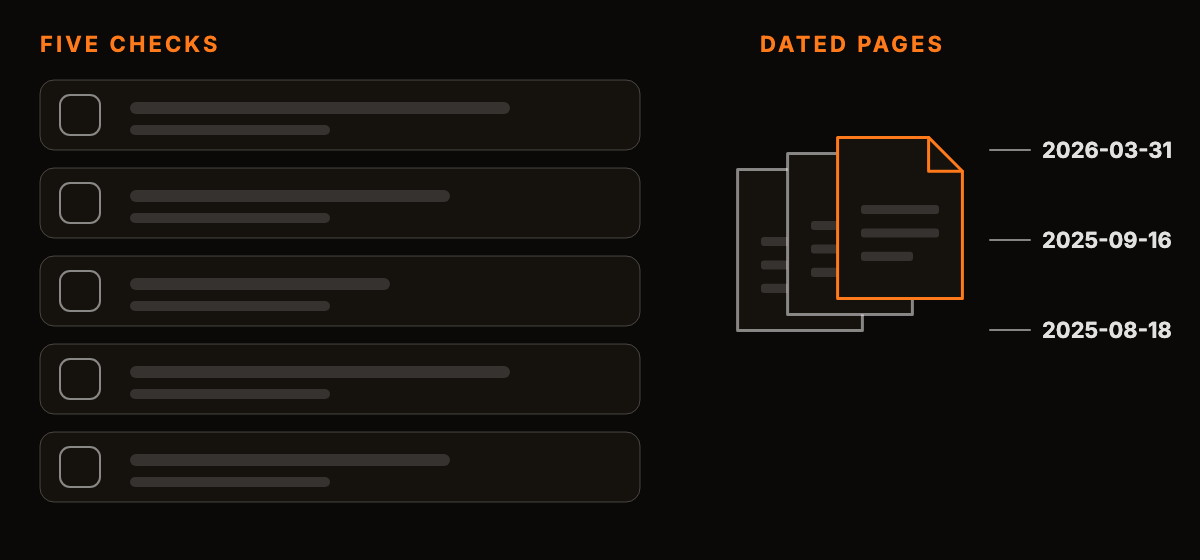
| FDA warning letters to peptide sellers | 2026-03-31, 2026-06-17, 2026-08-24 | Research labels do not change the products' intended use when the seller's own evidence shows human use; the products are "unapproved new drugs." | They are addressed to sellers, not buyers. |
| FDA personal importation page | Current as of 2025-08-18 | Importing drugs for personal use is illegal "in most circumstances"; FDA staff may use discretion in limited cases. | It does not promise discretion in any case. |
| CBP release, Cincinnati | 2026-03-31 | About 5,000 shipments seized; peptides "are regulated by" FDA; authenticity and safety "cannot be determined." | It does not describe the packages' labels. |
| FDA page on unapproved GLP-1 drugs | Current as of 2026-10-01 | Get a prescription and fill it at a state-licensed pharmacy; FDA has warned firms selling products "falsely labeled" for research purposes. | It covers GLP-1 drugs, not every peptide. |
As of 2026-10-07. Pages change, so check the date on each source before you rely on it.
What these sources do not settle
Several questions remain open.
- State law. State boards of pharmacy and medical boards add their own rules. FDA's compounding page says state boards have primary day-to-day oversight of pharmacies that are not outsourcing facilities. We did not review all fifty states' rules.
- Dietary supplements. One FDA briefing document, prepared for a July 2026 advisory committee, observes that a popular peptide is sold in the United States inside oral supplement products. It describes the market and reaches no legal conclusion about those products. We did not find an FDA statement settling the question, so we do not either.
- Pending decisions. FDA's staff briefing, dated 2026-05-11, says the evaluation criteria "weigh against" placing that peptide on the bulks list for 503A compounding. The advisory committee met on 2026-07-23 and 2026-07-24, and we did not find FDA's published outcome as of 2026-10-07. In a separate proceeding, FDA proposed on 2026-05-01 to exclude semaglutide, tirzepatide and liraglutide from the 503B bulks list; we found no final action as of 2026-10-07.
- Your own facts. What matters in any enforcement setting is the specific product, the specific seller's conduct and the specific shipment. A general web page cannot assess those.
What to do with this information
Read the criteria, not the slogans. Our five-point test for any seller appears in how to choose a peptide company. Only the first two criteria follow FDA's published safe signs; the other three are our own selection.
If you are considering a peptide for a health reason, talk with your own licensed clinician first. If you already hold a product of unknown origin, FDA's BeSafeRx page explains how to report problems, and FDA's MedWatch program takes reports of adverse effects.
Not legal advice: this page summarizes public documents on the date shown. It is not a legal opinion, and nothing here tells you whether a specific purchase is lawful.
Sources
- FDA: Compounding and the FDA, questions and answers page current as of 2025-09-16, read 2026-10-07
- Cornell LII: 21 USC 353a, pharmacy compounding read 2026-10-07
- Cornell LII: 21 CFR 201.128, meaning of intended uses read 2026-10-07
- FDA: bulk drug substances used in compounding under section 503A page current as of 2026-05-14, read 2026-10-07
- FDA warning letter dated 2026-03-31 read 2026-10-07
- FDA warning letter dated 2026-06-17 read 2026-10-07
- FDA warning letter dated 2026-08-24 read 2026-10-07
- FDA: personal importation page current as of 2025-08-18, read 2026-10-07
- CBP: Cincinnati CBP foils scheme to smuggle over 5,000 unapproved peptides release dated 2026-03-31, read 2026-10-07
- FDA: concerns with unapproved GLP-1 drugs used for weight loss page current as of 2026-10-01, read 2026-10-07
- FDA: how to buy medicines safely from an online pharmacy page current as of 2025-01-02, read 2026-10-07
- FDA: briefing document, Pharmacy Compounding Advisory Committee, 2026-07-23 and 2026-07-24 read 2026-10-07
- FDA: proposal to exclude semaglutide, tirzepatide and liraglutide from the 503B bulks list dated 2026-04-30, read 2026-10-07
FAQ
Is it illegal to buy peptides online?
We cannot give a yes or no, and we do not say that any specific purchase is or is not a crime. FDA says research-labeled peptide products are "unapproved new drugs" when the seller's evidence shows human use, and it points consumers to prescriptions filled at state-licensed pharmacies.
Does a "research use only" label make a product legal to sell?
FDA's warning letters dated 2026-03-31 say it does not change the product's intended use when the seller's own website establishes human use. FDA looks at claims, design and circumstances, as 21 CFR 201.128 describes.
Can I import peptides for personal use?
FDA's personal importation page says it is illegal for individuals to import drugs for personal use "in most circumstances." It lists limited cases in which staff may use discretion, and frames those as discretion rather than a right.
Are compounded peptides legal?
Under section 503A, a pharmacy may compound a drug for an identified patient on a valid prescription, using eligible bulk substances. Compounded medications are not FDA-approved, and not every peptide qualifies as an eligible ingredient.
Is it legal to buy peptides from a store or clinic?
That depends on what the business dispenses and under what license. Our guide to peptides near me lists what FDA's statements say a store or clinic may lawfully hand you.
Not medical advice. See the medical disclaimer.